Date & Time: 9th October 2025, 6:00 - 7:15 PM IST
Location: VMCC, IIT Bombay
Rethinking Risk, Redesigning Research: Chemistry's Expanding Role in Safer Medicines.
In today's era of rapid biomedical innovation, ensuring the safety of therapeutics—from discovery to delivery—is more critical than ever. This panel brings together four distinguished Editors-in-Chief of ACS journals to explore chemistry's expanding role in advancing safer drug innovation. The conversation will go beyond molecular design to examine how safety can be embedded across the entire drug development lifecycle—from lab bench to manufacturing floor, and from regulatory frameworks to real-world application.
The discussion will explore a range of pressing topics, including the role of genomics in drug safety, the promise of macromolecules in treating rare diseases, and the need for robust alternatives to animal testing. Panelists will also examine how industrial practices and supply chain considerations influence the safety and sustainability of drug development. Risk communication and international collaboration will be highlighted as essential tools for harmonizing safety standards and accelerating global access to safer medicines.
This session calls on the chemical sciences to lead in redefining drug safety—not as a regulatory hurdle, but as a core design principle that protects people, advances science, and ensures global health equity.
Themes:
- Risk Communication and International Collaboration
- Drug Safety and Genomics
- Macromolecules and Rare Diseases
- Alternatives to Animal Testing
- Industrial and Supply Chain Perspectives
Target Audience:
Pharmaceutical and Biotech Professionals, Academic Researchers and Faculty, Graduate and Doctoral Students, Healthcare and Medical Professionals, Policy Makers and Regulators, Industry Leaders and Innovators, Science Communicators and Journalists, Students and Early-Career Professionals
-Panelists-
Kelly Chibale
Editor in Chief: ACS Medicinal Chemistry Letters
Professor at University of Cape Town, South Africa

Biography:
Kelly Chibale is a Professor of Organic Chemistry at the University of Cape Town (UCT) where he holds the Neville Isdell Chair in African-centric Drug Discovery & Development. He is also a Schmidt Sciences AI2050 Senior Fellow, founding Director of the South African Medical Research Council Drug Discovery & Development Research unit at UCT, and Founder & Director of the UCT Holistic Drug Discovery and Development (H3D) Centre.
Kelly obtained his PhD in Synthetic Organic Chemistry from the University of Cambridge. This was followed by postdoctoral stints at the University of Liverpool and Scripps Research Institute.
Kelly's research interests are in infectious disease drug discovery and the development of tools and models to contribute to improving treatment outcomes in people of African descent.
He serves as Editor-In-Chief of the American Chemical Society (ACS)'s ACS Medicinal Chemistry Letters.
Krishna N. Ganesh
Editor in Chief: ACS Omega
Professor at Jawaharlal Nehru Centre for Advanced Scientific Research, India
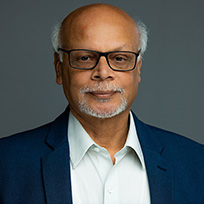
Biography:
Prof. Krishna N. Ganeshis SERB National Science Chair at the Jawaharlal Nehru Centre for Advanced Scientific Research (JNCASR) in Bangalore, India. Previously he served as the Founder Director of Indian Institute of Science Education and Research, Tirupati (IISER Tirupati) since 2017 till 2023 and Founder Director and Professor of Chemistry at IISER Pune from its inception in July 2006 to October 2017. He is also a Fellow of the Indian Academy of Sciences in Bangalore, the Indian National Science Academy in New Delhi, and The World Academy of Sciences. Ganesh is an expert in modified DNA and peptide-nucleic acids as novel cell penetrating agents.
Christa E. Müller
Editor in Chief: ACS Pharmacology & Translational Science
Professor at University of Bonn, Germany
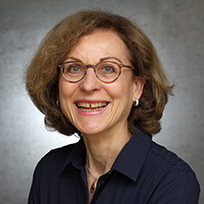
Biography:
Christa E. Müller studied Pharmacy at the University of Tübingen, Germany, and earned a Ph.D. in Pharmaceutical Chemistry. After postdoctoral stays at the NIH (USA), she became Associate Professor at Würzburg University, and subsequently Full Professor at the University of Bonn, Germany.
Her scientific interests include medicinal chemistry, structural biology, and molecular pharmacology of purine-binding membrane proteins, orphan GPCRs, and antiviral drugs. Disease indications comprise neurodegenerative, inflammatory and immune diseases, cancer, and infections.
She has published more than 500 scientific papers. Among a number of awards, she received the Nauta Pharmacochemistry Award by the European Federation of Medicinal Chemistry (2018), and the Gertrude Elion Medicinal Chemistry Award of the ACS (2024) and was inducted into the ACS Medicinal Chemistry Hall of Fame.
Since 2021, she acts as Editor-in-Chief of ACS Pharmacology & Translational Science. In 2023, she was elected as a member of the German National Academy of Sciences Leopoldina.
Mary Beth Mulcahy
Editor in Chief: ACS Chemical Health & Safety
Manager at Sandia National Laboratories, USA
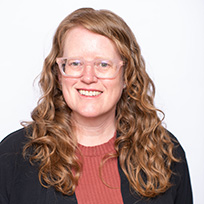
Biography:
Dr. Mary Beth Mulcahy serves as the Editor-in-Chief of the American Chemical Society's ACS Chemical Health & Safety journal. She is a manager within the Human-Driven Data Science group at Sandia National Laboratories (SNL) where her team studies and models how humans interact within systems by considering human tasks, workload, situational awareness, and decision-making in a variety of settings, including physical work environments and AI-human interfaces. Previously, Dr. Mulcahy spent almost 7 years in SNL's Global Chemical and Biological Security (GCBS) Program that built and strengthened knowledge for the responsible use of chemicals, equipment, and expertise at science facilities, small to medium chemical industrial sites as well as improve understanding and mitigation of accidental and deliberate chemical releases. Mary Beth joined GCBS after 9 years as an Investigator with the US Chemical Safety Board (CSB), a federal agency that determines the root causes of major chemical accidents in the US.
-Moderator-
Praveen K Vemula
Professor (Scientist-G), Institute for Stem Cell Biology and Regenerative Medicine, India
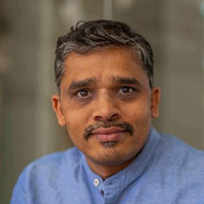
Biography:
Dr. Vemula is Head of Research, and an Associate Professor at iBRIC-inStem. He has obtained PhD from IISc, Bangalore and postdoctoral training from City University of New York and Harvard Medical School, USA. His expertise is developing chemical technologies for medical applications. His work spans the fields of biomaterials, drug discovery, drug delivery, medical devices, and chemical biology. He has published >90 peer-reviewed papers, has given >200 national and international invited lectures including three TEDx talks, and has >30 issued or pending national/international patents, which have been licensed to multiple biotech companies. Several technologies developed in his lab have formed the foundation for multiple products on the market, and currently under development. His technologies have led to the launch of 7 startup companies. Thus far, >25 products that are developed based on his technologies are in the market worldwide.