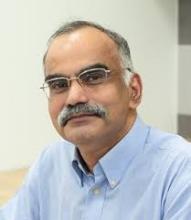
Seminar by Prof. Suresh Valiyaveettil (National University of Singapore) on "Are plastic wonder materials or a curse on ecology and human life?".
02 Jul 2025
Seminar Room # 350, second floor annex
------------------------------------------------------------------------
Speaker: Prof. Suresh Valiyaveettil
Department of Chemistry
National University of Singapore
Singapore 117548
Title: "Are plastic wonder materials or a curse on ecology
and human life?".
Day and Date: Wednesday, July 2, 2025
Time: 16.00 Hrs.
Venue: Room no. 350, Chemistry Department
Second floor, Annex
------------------------------------------------------------------------
Hosted by Prof. Ramaswamy Murugavel
Talk Title : "Are plastic wonder materials or a curse on ecology and human life?".
Abstract
Plastic materials made from a wide range of polymers are used in almost every aspect of our day-to-day life. However, the linear synthetic strategy used for preparing common polymers only involves ease of production, high stability, and processability with no circularity or sustainability. Large amounts of different polymers are produced and processed annually, but used polymer-based objects are difficult to recycle or reuse for multiple practical reasons. As a result, significant amounts of plastic materials end up in the environment. Such plastic wastes in the environment undergo slow degradation and releases small particles called micro- and nanoplastic particles. Even though many studies pointed out the toxicity of additive chemicals such as phthalates and bisphenol A, present in plastics, only limited knowledge exists on the adverse impact of plastic particles on the health of terrestrial or aquatic animals. To address the plastic waste issues, a few groups are working on developing sustainable polymers to replace synthetic ones. We focus on understanding the biological impact of plastic particles using animal and human cellular models. Our results indicate that the toxicity or adverse health impact of the nanoparticles of common polymers depends on the choice of animal models and the chemical nature of the polymers used. In a comparative study, fluorescent polymethylmethacrylate (PMMA) and polyvinylchloride (PVC) nanoparticles were used to explore the uptake, translocation, and toxicity in various biological models. PVC nanoparticles caused high mortalities in different animal and cellular models. A few sustainable polymers are also being developed to mitigate the danger from synthetic plastics. This talk will provide some of our recent results and challenges in this area.