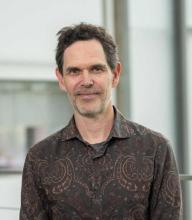
Seminar by Prof. Brian R. Crane (Cornell University) on "Photochemistry and chemical timing mechanisms that underlie eukaryotic circadian clocks".
21 Feb 2025
Seminar Room # 350, second floor annex
------------------------------------------------------------------------
Speaker: Prof. Brian R. Crane, PhD
George W. and Grace L. Todd Professor
Department of Chemistry and Chemical Biology, Canada
Title: "Photochemistry and chemical timing mechanisms that
underlie eukaryotic circadian clocks".
Day and Date: Friday, February 21, 2025
Time: 11.00 am.
Venue: Room no. 350, Chemistry Department
Second floor, Annex
------------------------------------------------------------------------------
Hosted by Prof. Ruchi Anand
Talk Title : "Photochemistry and chemical timing mechanisms that underlie eukaryotic circadian clocks".
Abstract
Eukaryotic circadian clocks are cell-autonomous molecular timing circuits that can be entrained to environmental conditions, most commonly light. In humans, clock dysfunction is linked to sleep abnormalities, mental disorders, metabolic disease, and cancer. Clocks are based on transcription-translation feedback loops, wherein heterodimeric transcription factors activate clock-controlled genes, among which, several code for repressor proteins that directly oppose the activators. Light entrainment involves cofactor-containing proteins that either upregulate the activators or promote degradation of the repressors. We focus on three model clock systems with outstanding questions regarding molecular architecture, interactions and photochemistry: 1) the fly clock (Drosophila melanogaster), which is set by Cryptochrome (CRY), the fungal clock (Neurospora crassa), which is set by the light-sensitive White-collar transcription factor complex, and the plant clock, wherein CRY proteins play their other best-known role in the light sensing. Core clock proteins across species are large, highly disordered and have a high capacity for multivalency. Because of this, liquid-liquid phase separation has been recently proposed as a mechanism that plays a role in the oscillators and their output. We aim to understand how the structures and dynamics of the complexes formed between clock activator and repressor proteins are modulated by light and posttranslational modification. In particular, photoactivation of CRYs and their targeting will be discussed, along with a potential role for phase separation in circadian timing.