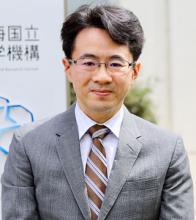
Seminar by Prof. Hiromune Ando (Gifu University, Japan) on "Updating the synthesis of sialic acid-containing glycans."
19 Nov 2025
Seminar Room # 350, second floor annex
Speaker: Prof. Hiromune Ando
Institute for Glyco-core Research (iGCORE), Gifu
University, Japan
Title: "Updating the synthesis of sialic acid-containing
glycans."
Day and Date: Wednesday, November 19, 2025
Time: 10.00 am.
Venue: Room no. 350, Chemistry Department
Second floor, Annex
------------------------------------------------------------------------
Hosted by Prof. Suvarn S. Kulkarni
Talk Title : "Updating the synthesis of sialic acid-containing glycans."
Abstract
Our research group has intensively explored robust chemistry for building a broad spectrum of sialic acid-containing molecules with a special focus on gangliosides and their functionalized probes. To elucidate the roles of gangliosides in the cell membrane organization, the production of the entire structure of gangliosides is of great importance. We have addressed two major issues in the chemical synthesis of gangliosides; sialylation and coupling of glycan and lipid (ceramide) moieties. We developed a promising strategy toward total synthesis of gangliosides using highly reactive synthetic units; N-Troc sialic acid donor, 1,5-lactamized sialic acid acceptors and glucosyl ceramide acceptors, thereby achieving the synthesis of highly complex gangliosides [1-3]. The strategy has also successfully served to create the fluorescently labeled ganglioside analogs, which allowed us to observe specific interactions with membrane molecules in live cell membrane by single molecule tracking techniques [4].
Meanwhile, we have attempted in parallel to develop a fully -selective sialylation. In 2019, we reported that macrobicyclic sialyl donors, which were tethered at the anomeric carboxyl group and the C5 amino group to generate a bridgehead oxocarbenium cation, ensured the fully -selective glycosidation by the bicyclic system without being affected by substrate structures or reaction conditions [5]. This method enabled the direct sialylation of oligosaccharides and glycolipids in high yields. Our new sialylation method has been used for the synthesis of fluorescent ganglioside analogs [6,7], highly complex ganglioside and polysialic acids. Recently, we demonstrated that macrobicyclic Kdo donors with -configuration enabled the full stereocontrol in the -glycosidation [8]. This method facilitated the stereoselective synthesis of the dimeric and trimeric Kdos found in lipopolysaccharide of pathogenic bacteria.
In this talk, I will share our recent results on the -glycosidations of sialic acid and Kdo using bicyclic donors and their application to the synthesis of highly complex glycans and functionalized probes.