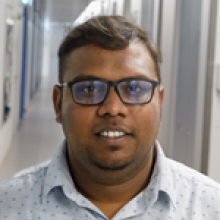
Seminar by Dr. Sk Amanullah (Aix-Marseille Université (amU), France) on "Bioinspired small molecule activation: from synthetic enzymes to molecular analogues to materials."
10 Dec 2025
Seminar Room # 350, second floor annex
Speaker: Dr. Sk Amanullah
UMR 7313-Institut des Sciences Moléculaires de
Marseille (iSm2), Aix-Marseille Université (amU),
France
Title: "Bioinspired small molecule activation: from synthetic
enzymes to molecular analogues to materials."
Day and Date: Wednesday, December 10, 2025
Time: 9.30 am.
Venue: Room no. 350, Chemistry Department
Second floor, Annex
--------------------------------------------------------------------------
Hosted by Prof. Arnab Dutta
Talk Title : "Bioinspired small molecule activation: from synthetic enzymes to molecular analogues to materials."
Abstract
The activation and transformation of small, energy-relevant molecules such as O2, NOx, and CO2
remain central challenge in catalysis, with implications for energy storage, environmental
remediation, and sustainable chemical synthesis. Our research integrates bioinorganic chemistry,
spectroscopy, and materials science to uncover the mechanistic principles underlying electro- and
photocatalytic function across diverse systems: from synthetic porphyrins to heterogeneous
materials.
My early work focused on the design and synthesis of porphyrin-based catalysts for O2, NO, and
CO2 reduction, revealing structure–reactivity relationships through spectroscopic and
electrochemical studies.1 As a postdoctoral researcher, I expanded into photo- and electrochemical
CO2 reduction, applying time-resolved, in-situ, and ex-situ spectroscopic techniques to elucidate
catalytic pathways.2 More recently, I have investigated heterogeneous materials-such as carbon
nitrides; using multinuclear solid-state NMR, X-ray absorption spectroscopy (XAS), and highresolution microscopy (HAADF-STEM) to identify the surface-sites and probe atomic-level
structure.3
Currently, I am exploring NOx reduction through a biomimetic lens, developing synthetic enzyme
models and hybrid molecular/material systems to achieve selective, sustainable reactivity. This
evolving body of work reflects a central goal: to develop catalysts that combine the precision of
molecular design with the durability and scalability of extended materials.