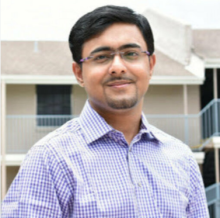
Seminar by Dr. Sajal Sen (faculty candidate) on "Emerging Landscapes of Molecular Medicines: From Cancer Immunotherapy to Brain Imaging."
15 Jan 2026
Seminar Room # 350, second floor annex
Speaker: Dr. Sajal Sen
Ph.D, Postdoctoral fellow, Frank Lab
Department of Chemical Physiology and Biochemistry
Oregon Health and Science University, Portland
Title: "Emerging Landscapes of Molecular Medicines: From
Cancer Immunotherapy to Brain Imaging."
Day and Date: Thursday, January 15, 2026
Time: 11.00 am.
Venue: Seminar room, room no. 350, second floor annex of the
Chemistry department
------------------------------------------------------------------------
Hosted by Department of Chemistry (Faculty Candidate)
Talk Title : "Emerging Landscapes of Molecular Medicines: From Cancer Immunotherapy to Brain Imaging."
Abstract
The new generation of molecular medicine is transforming the healthcare paradigm, emphasizing the integration of advanced molecular technologies into diagnostics and therapeutics. By bridging the realms of biology and chemistry on precision-targeted approaches, molecular medicines can now offer tailored solutions to complex diseases. Against this backdrop, the first part of the talk will introduce my PhD work on the development of gold N-heterocyclic carbene (Au-NHC) based novel anticancer drugs and their use as chemoimmunotherapy agents. I will briefly discuss the advancements we made in chemical functionalization strategies with Au-NHCs and their utility in oncology, ranging from cellular tracking to achieving protein-drug conjugates. Furthermore, I will highlight the discovery of a redox-active Au-NHC that can induce immunotherapeutic response in an immunosuppressive colon cancer model via a unique mechanism known as immunogenic cell death (ICD). The second part of the talk will be focused on my postdoctoral research on developing molecular imaging probes for sensing brain analytes. In particular, I will showcase a multimodal MRI contrast agent we discovered, built on an expanded porphyrin framework, that can detect cholinergic brain activity. Monitoring cholinergic function in living tissue through molecular imaging methods is a topic of significant interest in neuroscience, specifically due to close connection between neurological disorders and cholinergic abnormalities. I will elucidate how the rationally designed probe can map cholinergic components in the brain using MRI and also provide complementary information over a wide range of spatiotemporal scales using NIR fluorescence and photoacoustic imaging. The concluding segment of the talk will provide a brief outline of my future research plans. Leveraging my PhD and postdoctoral experience, I intend to employ a multidisciplinary approach that integrates immunotherapy and multimodal imaging to unravel the complexities of neurological dysfunctions. This research will target a broad spectrum of conditions, from aggressive brain cancers like glioblastoma to progressive neurodegenerative diseases, advancing both scientific understanding and therapeutic interventions.