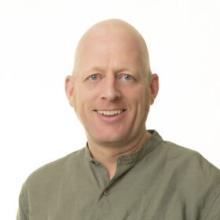
Seminar by Prof. Niko Hildebrandt (McMaster University, Canada) on "Nanomaterials and Molecules for FRET Biosensing, Bioimaging, and Theranostics."
29 Jan 2026
Seminar Room # 350, second floor annex
Speaker: Prof. Niko Hildebrandt
McMaster University, Department of Engineering
Physics, 1280 Main Street West, Hamilton, Canada
Title: "Nanomaterials and Molecules for FRET Biosensing,
Bioimaging, and Theranostics."
Day and Date: Thursday, January 29, 2026
Time: 16.00 Hrs.
Venue: Room no. 350, Chemistry Department
Second floor, Annex
------------------------------------------------------------------------
Hosted by Prof. Arindam Chowdhury
Talk Title : "Nanomaterials and Molecules for FRET Biosensing, Bioimaging, and Theranostics."
Abstract
The investigation of biomolecular recognition via Förster Resonance Energy Transfer (FRET)1 and
photoluminescence plays an important role for quantifying concentrations and distances in many
fields of the life sciences, analytical chemistry, and biophysics.
2,3 The materials used for FRET are
paramount for the success of the analytical application, and the FRET toolbox provides a large
choice of luminescent materials, including dyes, lanthanide complexes, fluorescent proteins,
quantum dots, and upconversion nanoparticles.
4,5 Noble metal nanoparticles can further extend
the analytical distance range via nanosurface energy transfer (NSET),6,7 which is similar to FRET.
Adding the broad choice of biological recognition molecules, including antibodies, artificial
protein binders, aptamers, nucleic acids, or peptides to the versatility, sensitivity, and specificity
of the world of FRETomics provides a boundless source for designing fluorescent probes for
biosensing, bioimaging, and theranostics.
8-12 The presentation will explain time-resolved and
time-gated FRET and the specific benefits for spectral and temporal luminescence multiplexing
with different materials and instruments. Then, recent applications of multiplexed FRET
biosensing, bioimaging, and theranostics with hybrid lanthanide-nanomaterials in solution, invitro, in-situ, and in-vivo will be discussed