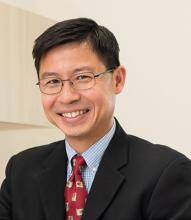
Seminar by Prof. Jason Boon Siang Yeo (National University of Singapore) on "Electrosynthesis of long-chain hydrocarbons."
24 Aug 2026
Seminar Room # 350, second floor annex
------------------------------------------------------------------------
Speaker: Prof. Jason Boon Siang Yeo
National University of Singapore, Singapore
Title: "Electrosynthesis of long-chain hydrocarbons."
Day and Date: Monday, August 24, 2026
Time: 16.00 Hrs.
Venue: Room no. 350, Chemistry Department
Second floor, Annex
------------------------------------------------------------------------
Hosted by Prof. Srinivasan Ramakrishnan
Talk Title : "Electrosynthesis of long-chain hydrocarbons."
Abstract
In this presentation, we share our works related to the development of catalysts and discovery of the mechanisms for the electroreduction of CO2 and CO to long-chain hydrocarbons. In particular, we shall show how C1-C6 alkanes and alkenes such as n-hexane could be selectively formed. The catalysts that were found to work well were unexpectedly based on polarized nickel and cobalt, rather than copper (which is generally known to reduce CO2 to C1-C3 molecules). We reveal how we probe both the identities of the catalytic sites and mechanistic pathways by which hydrocarbon products were formed by using spectroscopy, probe molecules and density functional theory calculations. In particular, we show how the selectivities of the products, such as their linear / branching ratios, could be controlled by using pulsed electrolysis.
While it is possible to break the limitations of copper catalysts by using nickel- or cobalt- based materials, the ability of the latter to selectively generate hydrocarbons is highly limited by the competing water reduction to H2 gas. We shall present a strategy to suppress H2 formation and enhance hydrocarbon formation during CO2 reduction by tuning the proton activity of proton donors dissolved in an aprotic dimethyl sulfoxide (DMSO) electrolyte. Across this donor series, the selectivity of hydrocarbons exhibits a volcano-shape dependence on the acidity of the proton donors. The Faradaic efficiency of C1-C6 hydrocarbon increases from 4 % in aqueous 0.1 M KHCO3 electrolyte to 22.1 % in DMSO electrolyte spiked with 0.2 M ethylene glycol (EG). Nuclear magnetic resonance (NMR) spectroscopy shows that, at 0.2 M, EG preferentially forms DMSO-EG hydrogen bonds that inhibit EG-EG clustering, thereby maintaining a well-dispersed proton donor environment. This solvation structure establishes a moderate proton-activity regime that facilitates CO2 activation and C–C chain growth, while suppressing H2 formation. Collectively, our results reveal that tuning both the molecular structure of the proton donor and its concentration-dependent solvation behavior in DMSO provides a strategy to delineate and access the proton-activity window that maximizes CO2-to-hydrocarbon conversion.