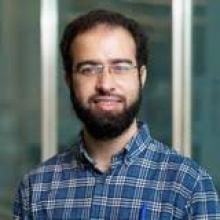
Seminar by Dr. Javid Ahmad Malla (Francis Crick Institute/King's College London) on "Supramolecular Chemistry for Bio-Inspired Nanotechnology."
20 Jul 2026
Seminar Room # 350, second floor annex
Speaker: Dr. Javid Ahmad Malla
Post-Doctoral Associate, Francis Crick
Institute/King's College London
Title: "Supramolecular Chemistry for Bio-Inspired
Nanotechnology."
Day and Date: Monday, July 20, 2026
Time: 11.00 am.
Venue: Room no. 350, Chemistry Department
Second floor, Annex
------------------------------------------------------------------------
Hosted by Prof. Debabrata Maiti
Talk Title : "Supramolecular Chemistry for Bio-Inspired Nanotechnology."
Abstract
Supramolecular chemistry is the study of molecular assemblies governed by noncovalent interactions, has evolved into a powerful framework for designing functional systems at the interface of chemistry, biology, and materials science. Recognised by the 2016 Nobel Prize in Chemistry, the field now enables the construction of complex, information-rich architectures that rival the sophistication of biological systems such as membrane proteins.
My research leverages these principles to develop synthetic supramolecular systems that operate at biological interfaces. In this talk, I will demonstrate how tailored assemblies mediate controlled information transfer across cell membranes, mimicking the function of membrane-embedded proteins and opening new opportunities for therapeutic intervention. Extending these concepts, I will show how bio-inspired supramolecular design can be applied to membrane-based desalination, enabling selective and energy-efficient separations. I will also briefly present how we can exploit supramolecular interactions to generate combinatorial PROTAC libraries, establishing a modular platform for targeted protein degradation.
Looking forward, my research aims to move beyond biomimicry towards the creation of synthetic, life-like systems. I will outline a vision centred on systems chemistry approaches to programme communication in self-sustaining artificial cells, coupled with the development of quantitative imaging tools to interrogate and predict dynamic biological processes. In parallel, I will address fundamental challenges in membrane-based separations, positioning supramolecular design as a route to scalable solutions for water remediation.
Collectively, this programme positions supramolecular chemistry not merely as a tool for molecular design, but as a foundation for engineering function that will bridge molecular precision with systems-level behaviour to address grand challenges in sustainability and biomedicine.