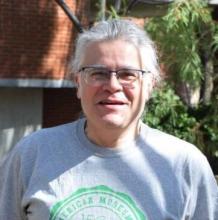
Seminar by Dr. Ronan Le Lagadec (National Autonomous University of Mexico) on "Photoactivatable Group 8 Metal Complexes for Anticancer Applications".
25 Nov 2026
Seminar Room # 350, second floor annex
------------------------------------------------------------------------
Speaker: Dr. Ronan Le Lagadec
Instituto de Química, Universidad Nacional Autónoma
de México, Ciudad de México, Mexico
Title: "Photoactivatable Group 8 Metal Complexes for
Anticancer Applications".
Day and Date: Wednesday, November 25, 2026
Time: 11.00 am.
Venue: Room no. 350, Chemistry Department
Second floor, Annex
------------------------------------------------------------------------
Hosted by Prof. Prasenjit Ghosh & Prof. Debabrata Maiti
Talk Title : "Photoactivatable Group 8 Metal Complexes for Anticancer Applications".
Abstract
For many years, our research team has been investigating iron, ruthenium, and osmium metallocycles as a new class of effective anticancer agents. The effects of these organometallic derivatives on various biological targets have been assessed, revealing modes of action distinct from those of platinum derivatives commonly used in chemotherapy [1-3]. Additionally, visible light irradiation significantly enhanced the cytotoxic activity of ruthenium and osmium complexes bearing π-expanded ligands by generating reactive oxygen species (ROS) [4]. To improve the selectivity and cytotoxicity of these compounds for photodynamic therapy (PDT), we synthesized a series of porphyrins and chlorins and coordinated them to ruthenium and osmium. Experiments on human gastric cancer cells showed a remarkable activity upon light exposure, with the photocytotoxicity index exceeding 1000 in some cases [5]. Biological studies, combined with EPR and UV-visible spectroscopy, allowed identification of possible modes of action. Upon light exposure, the complexes can generate singlet oxygen as well as hydroxyl and superoxide radicals, causing cell death via a caspase-3-mediated apoptotic pathway and via CHOP, an endoplasmic reticulum stress transcription factor. These findings highlight our complexes as promising multi-target therapeutic options that could help overcome tumor resistance mechanisms.